
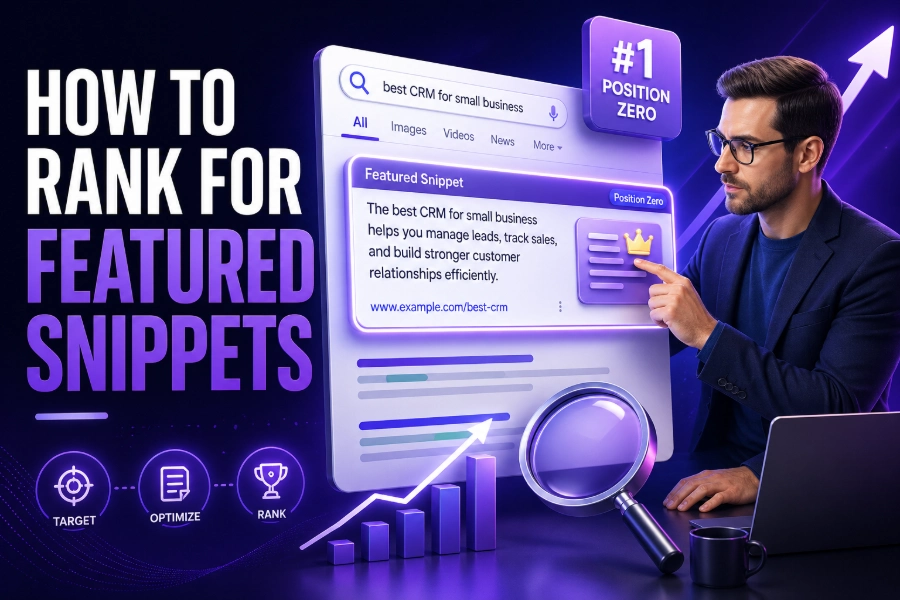
Achieving a featured snippet on Google is a goal for many digital marketers and SEO specialists. If you want to rank for featured snippets, it’s crucial to understand how Google selects and displays content. Featured snippets provide visibility in the coveted “position zero” spot, helping increase click-through rates (CTR) and drive more organic traffic to your website.
In this article, we’ll explore proven strategies to help you rank for featured snippets. You’ll learn the best practices and actionable tips to ensure your content meets Google’s requirements for these valuable search result positions. Whether you’re targeting paragraph snippets, list snippets, or table snippets, you’ll gain the insights needed to optimize your website.
What Are Featured Snippets and Why Should You Care?
Featured snippets are concise answers to search queries that appear at the top of Google’s search results. These snippets are designed to provide users with direct, quick answers to their questions without requiring them to click through to a website. As a result, appearing in a featured snippet is highly valuable because it can significantly increase your website’s visibility.
Being featured in a snippet can provide numerous benefits:
- Increased Click-Through Rate (CTR): Featured snippets often drive higher CTRs because they capture users’ attention right away.
- Improved Visibility: These snippets appear at the top of search results, which increases your website’s chances of being seen by a larger audience. Once users land on your page, engaging visuals created with a banner maker can help reinforce key messages, improve the overall user experience, and support higher engagement.
- Voice Search Optimization: Featured snippets are often used in voice searches, as voice assistants pull directly from this content.
To rank for featured snippets, you need to optimize your content for Google’s featured snippet criteria. For example, providing clear, concise answers in formats that match Google’s typical snippet types is essential. Additionally, ensure your content is well-structured, as Google prefers easy-to-parse content.
For tools that can help you improve your website’s optimization efforts, you can explore premium wordpress themes, PSD & HTML templates for enhanced website functionality and aesthetics.
How Google Chooses Featured Snippets
Understanding how Google selects featured snippets is key to optimizing your content. Google primarily chooses snippets based on their relevance to the user’s search query. Here are a few factors that influence Google’s decision-making process:
- Clear and Direct Answers: Google tends to rank content that provides a clear, concise answer to a question. For instance, if a user asks, “What is a featured snippet?” Google will pull content that directly defines and explains it.
- Content Structure: Structured data like headings, bullet points, and numbered lists makes it easier for Google to identify potential snippet-worthy content.
- User Intent: Google looks at what users are searching for and ensures the content addresses their needs. Snippets are most often pulled from pages that provide comprehensive, yet straightforward answers.
By focusing on these factors, you can increase your chances of ranking for featured snippets. Learn how to format your content with this in mind by exploring how to duplicate a page in WordPress to streamline content creation and testing.
Types of Featured Snippets
There are several types of featured snippets, and it’s important to understand the differences so that you can tailor your content to each one. The three main types of featured snippets are:
- Paragraph Snippets: These are the most common type of featured snippet. They provide a direct, concise answer to a question in a paragraph format. For instance, when someone searches for “how to rank for featured snippets,” the best-performing content will provide a clear explanation of how to achieve it.
- List Snippets: These are often used when the search query involves a step-by-step guide, tips, or a series of instructions. It’s crucial to break down complex processes into numbered or bulleted lists to optimize for these types of snippets.
- Table Snippets: If your content involves comparative data, structuring it in a table format increases your chances of being featured in a snippet. Ensure that the data is organized, easy to read, and directly addresses user queries.
When optimizing for these snippets, the structure of your content becomes even more important. To explore more about structuring and optimizing content, you can explore how to tell what font a website is using to make sure your content design enhances readability.
The Role of On-Page SEO in Featured Snippets
On-page SEO plays a significant role in ranking for featured snippets. Here are some essential on-page SEO practices to follow:
- Use of Keywords: Make sure your targeted keywords are naturally included in your content. For featured snippets, using long-tail keywords that align with common search queries can make a difference.
- Optimized Titles and Meta Descriptions: Include your target keywords in your titles and meta descriptions, ensuring they are appealing and relevant.
- Structured Content: Break your content into sections with clear headings (H2, H3) to make it easier for Google to identify potential snippet-worthy content.
It’s also important to consider semantic HTML (such as using H2 for headers and paragraph tags for text) to make the content more easily understood by search engines. These practices can directly impact whether your content will appear in featured snippets.
How to Optimize for Paragraph Snippets
If you want to optimize your content to rank for paragraph snippets, here’s what you need to focus on:
- Answer Questions Directly: Answer the search query as clearly and concisely as possible in the first few lines of your content. Google prefers content that provides direct, valuable answers.
- Use Proper Formatting: Structure your answer with clear paragraphs that are easy to read. A well-structured paragraph with a clear answer is more likely to be featured.
- Target Long-Tail Keywords: Many paragraph snippets are pulled from pages that rank for long-tail keywords. Focus on long-tail search queries to capture these featured snippets.
How to Optimize for List Snippets
To optimize your content for list snippets, follow these steps:
- Create Step-by-Step Lists: When answering a query that involves a process, break it down into a numbered or bulleted list. This makes it easier for Google to extract and display in a snippet.
- Use Headers and Subheaders: Use H2 or H3 headers for each item in the list. This not only helps Google but also improves readability for users.
- Numbering: If possible, include numbered lists. These are often preferred by Google for ranking in list-based snippets.
Why is WordPress so hard to use might not seem related at first, but understanding challenges in website management can improve your content strategy for more efficient SEO optimization.
How to Optimize for Table Snippets
Table snippets work well when the search query involves comparisons or statistical data. To optimize for table snippets:
- Use Tables for Data: Create tables that present data in a clear, organized manner. If users are searching for comparisons, having a table with well-organized columns and rows will help.
- Optimize for Mobile: Ensure that your tables are mobile-friendly. Many users now access search results on mobile devices, and Google prefers content that provides a seamless experience across all platforms.
By structuring your content in these formats, you increase your chances of appearing in table snippets, which can be a valuable source of traffic.
Conclusion
In summary, ranking for featured snippets requires a comprehensive SEO strategy that focuses on content clarity, structure, and relevance. By targeting the right keywords, formatting your content for readability, and answering user queries directly, you increase your chances of securing a position in featured snippets.
Remember to focus on the type of snippet you want to target, whether it’s a paragraph, list, or table snippet. Implementing the right strategies will position your content for success in Google’s search results. Start optimizing your content today for featured snippets and watch your search visibility soar.
FAQs
What is a featured snippet?
A featured snippet is a special result that appears at the top of Google’s search results, providing direct answers to search queries. These snippets are designed to give users immediate information without needing to click through to a website.
How do featured snippets impact SEO?
Featured snippets can significantly improve click-through rates (CTR) and organic traffic by positioning your content at the top of search results. Ranking for these snippets increases your visibility and authority in the eyes of both Google and users.
What types of featured snippets are there?
The three main types of featured snippets are paragraph, list, and table snippets. Each type presents answers in different formats, such as concise text, step-by-step instructions, or organized data tables, catering to various user queries.
How can I optimize for paragraph snippets?
To optimize for paragraph snippets, ensure your content answers user questions directly and concisely. Use clear, informative paragraphs within the first 100-150 words of your content, providing a well-structured response to the query.
How can I rank for list snippets?
To rank for list snippets, structure your content in a numbered or bulleted list. Break down complex processes or guides into clear, digestible steps, and use headers like “How to” or “Top X” to make the content snippet-friendly.
What is the best content structure for table snippets?
For table snippets, structure your content using tables to present data comparisons clearly. Use appropriate headings, rows, and columns to make it easy for Google to extract the relevant information for display in a table snippet.
Why is keyword usage important for featured snippets?
Proper keyword usage helps Google understand your content’s relevance to user queries. Include the targeted keyword or long-tail phrase in your headings, meta descriptions, and throughout your content, ensuring it naturally matches the search intent.
Can I optimize old content for featured snippets?
Yes, you can optimize old content for featured snippets by updating it with clear, concise answers and structuring it for snippet-friendly formats. Adding headings, bullet points, and relevant keywords can improve its chances of being featured.
How can I track my featured snippet rankings?
You can track featured snippet rankings by using SEO tools like SEMrush, Ahrefs, or Google Search Console. These tools allow you to monitor your keyword rankings and see if your content has been selected as a featured snippet.
What are the benefits of ranking in a featured snippet?
Ranking in a featured snippet increases visibility, boosts click-through rates (CTR), and drives better organic traffic. It also enhances your authority and credibility with users, leading to greater brand recognition and trust.