
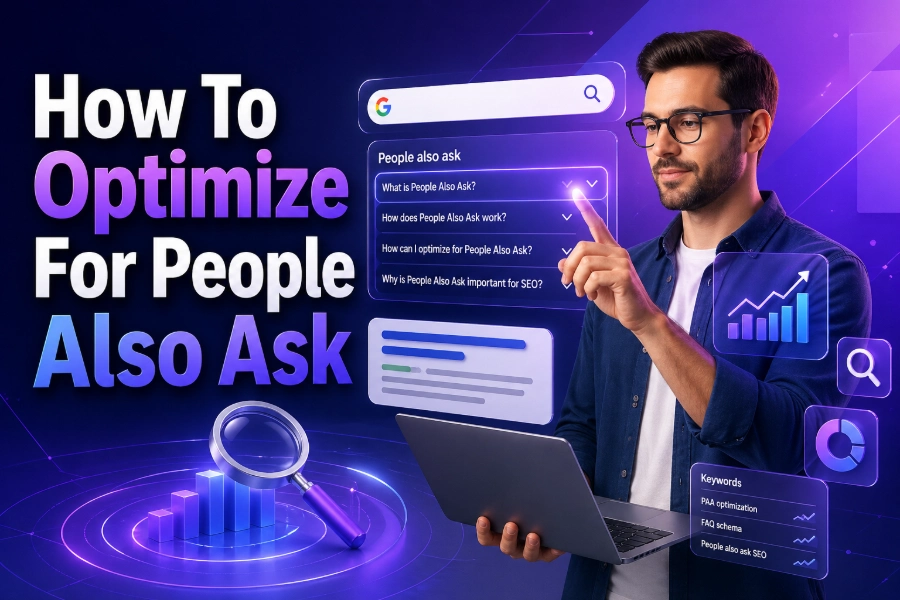
Optimizing for People Also Ask (PAA) is an essential strategy for improving your website’s visibility in search engine results. This feature in Google’s search engine allows users to quickly find answers to their questions, presenting multiple queries related to their search. By mastering PAA, you can leverage this valuable resource to drive traffic, improve click-through rates, and enhance your website’s authority.
In this article, we’ll explore strategies to help you optimize your content for PAA, offering practical insights that can improve your SEO performance and audience engagement. Let’s dive into the details of how to get your content featured in these coveted PAA boxes and boost your site’s rankings.
What Is People Also Ask (PAA)?
People Also Ask (PAA) is a powerful feature in Google’s search results. It displays a set of questions related to the user’s original search, offering direct answers. The questions expand when clicked, showing brief answers sourced from authoritative websites.
PAA is a critical aspect of modern SEO as it not only boosts visibility but also drives engagement by providing answers in a format that aligns with user intent. If you’re not optimizing for PAA, you’re missing out on a significant opportunity to increase organic traffic.
To get featured in PAA, you need to identify relevant questions that your target audience is asking. Using platforms that deliver premium wordpress themes, PSD & HTML templates can help you explore these queries and optimize your content accordingly. Targeting these questions is a great way to enhance your site’s chances of being featured.
How to Find PAA Questions Related to Your Content
Finding relevant People Also Ask (PAA) questions is crucial for content optimization. There are several ways to discover PAA queries. Start by typing your target keyword into Google’s search bar and examine the related questions that appear.
Next, use keyword research tools like how to duplicate a page in WordPress to dive deeper into the questions people are asking. These tools provide insights into commonly searched phrases that can help you better align your content with user needs.
Once you have identified the right questions, incorporate them naturally into your content. Answer these queries concisely and accurately to increase the likelihood of your content appearing in PAA boxes. You can also structure your answers using FAQ schema markup to help Google understand your content better.
How to Structure Your Content for PAA Optimization
Structuring your content is one of the most critical factors in optimizing for People Also Ask. To improve your chances of being featured, create content that answers the questions directly and thoroughly.
For each relevant PAA question, craft a concise yet informative answer. Try to keep answers short, ideally around 40-60 words, and ensure they align with the user’s search intent. Formatting your answers using bullet points, numbered lists, or structured data like FAQs can make it easier for Google to parse and display your content.
Additionally, it’s important to know how to tell what font a website is using. Featured snippets often trigger PAA boxes, and aligning your content to meet the snippet format can increase your chances of being featured.
Using FAQ Schema Markup to Optimize for PAA
One of the best practices for optimizing for PAA is implementing FAQ schema markup. This markup helps Google understand the structure of your content and how it relates to the questions being asked.
FAQ schema can boost your visibility by making your answers eligible to appear as featured snippets in PAA boxes. Ensure that your answers are concise and direct, as schema markup is best utilized for short, straightforward content.
Adding FAQ schema to your website involves adding structured data to your HTML. This data communicates with search engines to display your content in rich results. For a step-by-step guide, check out how to implement FAQ schema on your pages.
Leverage Tools to Track PAA Opportunities
Tracking and monitoring People Also Ask opportunities is essential for consistent optimization. You can use various tools to monitor PAA results for specific keywords. Tips like how long does it take to build a website are designed to help you discover related questions, which is key for staying ahead of competitors in search results.
By identifying PAA questions that relate to your niche, you can stay on top of evolving user intent and adapt your content strategy to match.
Key Strategies for Increasing Your Chances of Being Featured in PAA
- Create High-Quality, Relevant Content: Ensure that your content provides value and answers questions directly. PAA boxes prioritize concise, accurate, and authoritative answers.
- Focus on Structured Data: Use schema markup to help Google identify and display your content in PAA boxes. Structured data helps search engines understand your content’s relevance.
- Target Long-Tail Keywords: Long-tail keywords often trigger PAA results. Focus on these longer phrases as they tend to have less competition and higher conversion potential.
- Optimize for Featured Snippets: Many PAA boxes are sourced from featured snippets. Structure your content to answer questions directly and in a snippet-friendly format to improve your chances.
Tracking Your Results and Adjusting Your Strategy
After optimizing your content for PAA, it’s important to track your performance and adjust your strategy accordingly. Use tools like Google Search Console and how to duplicate a page in wordpress to monitor your rankings and see if your content is being featured in PAA boxes.
Regularly updating your content and optimizing for new PAA questions can ensure that your website remains relevant and visible in search results.
Conclusion
In conclusion, optimizing for People Also Ask (PAA) can significantly improve your SEO performance by increasing visibility and driving organic traffic. To succeed, focus on answering questions clearly, using structured data, and targeting long-tail keywords. By continually refining your strategy and tracking your results, you can stay ahead of the competition and make the most out of PAA optimization.
Now that you have the tools and strategies to optimize for PAA, start implementing them into your content today. With the right approach, you can elevate your website’s authority and attract more traffic.
FAQs
How can I target PAA questions for SEO?
To target PAA questions, analyze user intent and identify common queries related to your content. Use tools like AlsoAsked and Zeo to find frequently asked questions, then structure your content to provide clear, concise answers that match these queries.
Why is optimizing for PAA important?
Optimizing for People Also Ask (PAA) is crucial because it boosts visibility in search results. By appearing in PAA boxes, your website can attract more organic traffic, engage users with direct answers, and improve your overall SEO performance.
What is the best way to structure content for PAA?
To optimize content for PAA, structure your answers to be concise, usually 40-60 words. Use headers, bullet points, and FAQ schema to make your content easy to read and ensure it aligns with user queries in search results.
How does FAQ schema help in PAA optimization?
FAQ schema helps Google recognize and display your content in rich results. By implementing structured data, your answers can be featured in PAA boxes, enhancing visibility and driving more traffic to your site from relevant search queries.
What tools can I use to track PAA questions?
To track PAA questions, use tools like AlsoAsked and Zeo. These platforms allow you to discover popular related queries, monitor your performance in PAA results, and adapt your content strategy for improved SEO rankings.
Can long-tail keywords improve PAA optimization?
Yes, long-tail keywords are highly effective for PAA optimization. They often trigger PAA boxes because they’re specific and less competitive. Focusing on these keywords allows you to target niche queries, improving your chances of being featured.
How do I know if my content is appearing in PAA?
You can monitor PAA appearances through Google Search Console and third-party SEO tools. These platforms show you which keywords trigger PAA boxes and how well your content is performing in those queries, allowing for ongoing optimization.
Is it necessary to use structured data for PAA?
While not mandatory, using structured data such as FAQ schema is highly recommended. It helps search engines better understand your content, increases your chances of appearing in PAA boxes, and enhances your site’s visibility in search results.
How can I improve my chances of being featured in PAA?
To improve your chances, create high-quality, relevant content that answers questions directly. Focus on concise, clear answers, use structured data, and target long-tail keywords. Regularly update your content to align with changing search trends and user intent.
What impact does PAA have on click-through rates (CTR)?
Being featured in PAA boxes can significantly improve your CTR. Since PAA provides quick answers, users are more likely to click on your content. This direct exposure can drive traffic, increase engagement, and improve your site’s search rankings.