
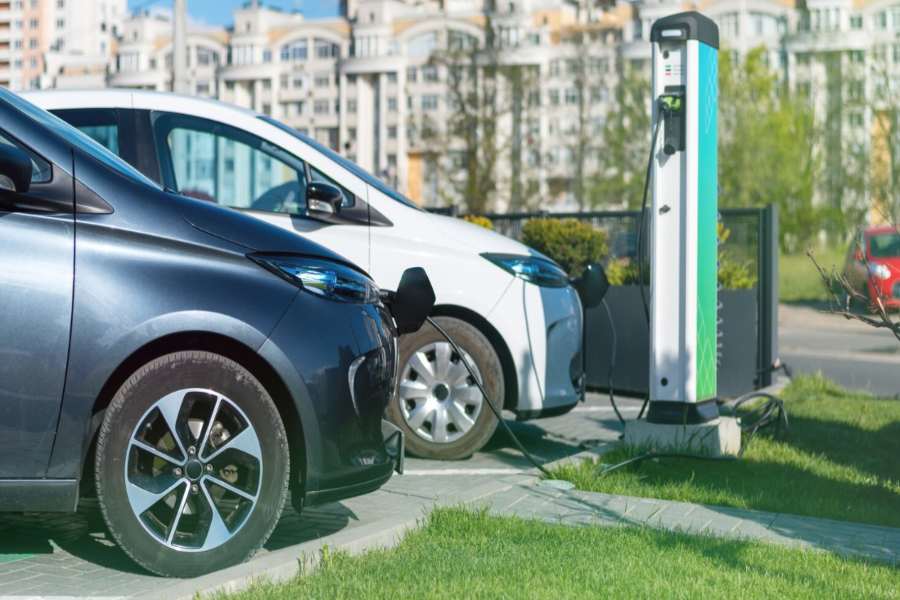
The global transport sector is undergoing a massive structural shift toward electrification. Driven by corporate sustainability initiatives, tax incentives, and evolving emissions mandates, the transition to electric vehicles (EVs) is no longer a future projection—it is a live operational reality. For modern property developers, multifamily housing operators, corporate office managers, and fleet coordinators, providing high-reliability EV charging infrastructure has rapidly moved from a premium tenant amenity to a baseline operational requirement.
However, scaling a commercial EV charging network introduces severe technical and economic roadblocks. Unlike traditional building systems, a cluster of Level 2 or Level 3 DC fast chargers places unprecedented, highly volatile energy demands on localized electrical grids.
When multiple vehicles plug in concurrently, they create massive load spikes that can easily exceed a building’s rated electrical capacity. Traditionally, solving this bottleneck required property owners to execute expensive utility grid upgrades, absorb high peak-demand utility charges, and hire dedicated personnel to manage daily technical operations.
To prevent these infrastructure bottlenecks from draining property margins, modern real estate and logistics networks are migrating away from unmanaged hardware setups and moving toward intelligent, cloud-native software orchestration.
The Operational Friction of Unmanaged EV Infrastructure
To build a profitable, future-proof charging network, asset managers must first look past the hardware-centric approach that views EV deployment as a simple matter of mounting chargers to a wall. The true complexity of commercial charging lies within the invisible layers of power distribution, operational uptime, and transaction management.
Grid Capacity and the Demand Charge Trap
The most immediate hurdle facing commercial properties is limited electrical capacity. A typical office building or apartment complex is engineered with a localized power budget tailored to lighting, HVAC systems, and standard appliances. Introducing a bank of commercial chargers without an active control layer can immediately overload the building’s main transformer.
Furthermore, electrical utilities assess heavy “demand charges” based on the single highest peak-power spike recorded during a billing cycle. A single unmanaged hour where ten vehicles charge simultaneously during peak building use can drive a property’s utility bill up by thousands of dollars, completely erasing the economic viability of the station.
Hardware Fragmentation and Offline Downtime
The commercial EV charging hardware market is highly fragmented. Operators routinely struggle with reliability issues, firmware desynchronizations, and broken communication links between chargers and payment gateways.
When an isolated charger experiences an outage or a payment processing failure, facilities teams are rarely alerted in real time. Instead, the failure is discovered when a frustrated EV driver reports a broken machine.
For property owners, managing these technical issues creates a constant administrative burden, forcing internal maintenance teams to troubleshoot network configurations and coordinate with third-party technicians instead of focusing on core asset preservation.
Moving from Dumb Plugs to Intelligent Load Balancing
Overcoming these capacity barriers requires moving away from passive “dumb” chargers and deploying a dynamic, hardware-agnostic control framework. Modern charging environments leverage the Open Charge Point Protocol (OCPP) to establish continuous, bidirectional data communication between individual physical ports and a centralized cloud interface.
This software layer transforms raw electrical circuits into an elastic, programmable utility pool. Instead of delivering a static, unyielding current to every plugged-in vehicle, the control system calculates energy distribution dynamically based on overall building demand, active session counts, and custom occupancy timelines. This intelligent load shifting allows properties to install up to six times more physical charging points on an existing transformer without requiring a single physical utility grid upgrade.
The Architecture of Automated Fleet and Property Management
A true enterprise-grade software system serves as a central hub that unifies power management, payment processing, driver access, and proactive maintenance alerts into a single dashboard. This allows property owners to retain ownership of their infrastructure upside without taking on the day-to-day burden of system operations.
For real estate networks, workplace parking environments, and enterprise fleets looking to automate their charging setups, integrating the ev charging station management software platform built by Ampaway provides the core infrastructure needed to run automated, highly optimized charging grids. Rather than forcing property teams to handle technical troubleshooting, rate configurations, or utility spikes manually, this integrated platform combines smart load balancing with real-time financial tracking and remote operator controls. This approach guarantees optimal power delivery while providing transparent, session-by-session performance data directly to owner and driver interfaces.
Multi-Property Portfolio Controls and Live Tracking
When an asset manager deploys a centralized cloud management platform, they gain access to a comprehensive operational control layer. This eliminates the guesswork from commercial EV deployments:
- Unified Portfolio Management: Operators can monitor and control multiple charging sites spread across different regions from a single dashboard, comparing real-time usage metrics and system performance without swapping software profiles.
- Flexible Custom Pricing Profiles: The platform enables property teams to implement granular pricing structures. Owners can set custom rates by time of day, individual charger, or specific user tiers (e.g., offering free charging for employees while executing paid, time-slot charging for the public).
- Live Revenue and Energy Visibility: Every active charging event is tracked instantly, giving management complete visibility into energy consumption, net revenue growth, and monthly payout statements down to the exact kilowatt-hour.
Cross-Industry Deployment Vectors for Scalable Charging
The mass adoption of smart EV charging software has unlocked powerful new asset monetization, employee retention, and route optimization strategies across various commercial and multi-family sectors.
Multifamily Real Estate and Residential Amenities
In the residential sector, access to reliable, overnight charging has become a decisive factor for high-income tenants choosing where to lease. However, apartment buildings are rarely equipped to handle complex utility tracking across shared or assigned parking spaces.
By deploying automated charging software, property managers can offer seamless, app-driven charging access directly to residents. The software tracks individual user accounts, manages background billing automatically, and ensures that residential charging runs safely during off-peak night hours when overall building energy usage is lowest.
Workplace and Commercial Office Parkings
For corporate office parks and enterprise headquarters, providing EV infrastructure supports broader corporate environmental, social, and governance (ESG) milestones while acting as a powerful perk for employee retention.
Smart software allows facilities teams to optimize office energy profiles by utilizing dynamic load management. The system automatically shifts power allocation across vehicle bays during the day, ensuring that fleet vehicles or executive cars get priority charging without causing expensive power spikes during peak office hours.
Technical Infrastructure: The Mechanics of Smart Load Management
From an engineering perspective, preventing localized grid overloads requires the charging software to execute continuous, real-time calculations using smart power distribution models. When a vehicle hooks up to an active port, the cloud dashboard processes multiple data streams to optimize power delivery.
Dynamic Load Balancing (DLB) Matrix
The software uses Dynamic Load Balancing to adjust the power output of active chargers instantly based on the total real-time electrical headroom available at the property:
Available Power for Charging=Total Building Capacity−Current Building Load
If the current building load increases due to a spike in HVAC use or machinery operations, the management software instantly dials down the amp draw of the active charging stations. Once the main building load drops, the software releases that stored capacity back to the vehicles, maximizing charging speeds without risking tripped breakers or service disruptions.
Real-Time Session Payload Structure
To maintain continuous system oversight, physical chargers send highly structured telemetry messages back to the cloud management gateway using secure web socket connections. The platform processes this incoming data, calculates structural capacity limits, and instantly pushes back operational instructions to the physical chargers, keeping hardware, software, and financial transactions completely synchronized. Organizations that rely on multi cloud management platforms can further improve this process by coordinating workloads, monitoring infrastructure across providers, and maintaining consistent performance and availability for EV charging operations.
Transforming Charging Infrastructure from an Amenity to a Revenue Stream
Beyond stabilizing property power limits and lowering engineering risks, deploying an intelligent software layer allows companies to transform their EV chargers from an operational expense into a self-sustaining revenue engine.
Automatic Payment Processing and Clear Financial Auditing
By automating the payment collection loop, property owners can treat charging bays like automated toll lanes. Drivers use a streamlined mobile application to scan QR codes, launch charging sessions, and pay securely using stored credit cards or mobile wallets.
The management system processes the transactions, filters out utility costs, and generates clean monthly statements, turning charging infrastructure into a predictable source of recurring revenue that boosts the property’s overall net operating income (NOI).
Securing Long-Term Asset Appraisals
As electric vehicle adoption continues to accelerate globally, commercial properties without charging infrastructure risk becoming obsolete, lower-value assets.
By installing scalable, software-backed networks today, real estate portfolios can future-proof their properties, increase overall long-term asset appraisals, and ensure they are fully prepared to meet the strict carbon-neutral building compliance codes of the next decade.
The Next Horizon: Vehicle-to-Grid (V2G) and Virtual Power Plants
The future of EV infrastructure extends far beyond basic one-way power delivery. The next major technological shift will see charging grids transform into decentralized energy storage systems known as Virtual Power Plants (VPPs).
Through the mass implementation of bidirectional charging and advanced software automation, parked vehicle fleets will function as a giant collective battery network. During periods of extreme regional grid strain, the management software can instruct connected vehicles to temporarily feed excess battery power back into the building or the main municipal grid, stabilizing the local power infrastructure.
When regional grid strain drops and energy costs decline, the system reverses the power flow to recharge the vehicles at a fraction of the cost. This intelligent energy management allows commercial property operators to unlock lucrative utility rebates, minimize net energy costs, and play an active role in stabilizing regional power distribution networks.
Conclusion: Proactive Management as a Scaling Framework
The electrification of the global transportation network represents a permanent evolution in commercial property design and infrastructure logistics. Organizations can no longer afford to deploy unmanaged charging hardware that adds to facilities workloads, triggers unpredictable energy bills, and strains local electrical capacities.
To survive and build sustainable profit margins in this changing market, utilizing data-driven, automated network orchestration is an absolute operational necessity. Implementing a centralized software framework allows modern enterprise teams to eliminate technical complexity, protect property electrical grids from demand spikes, and secure automated streams of recurring income.
Platforms like Ampaway give asset managers, businesses, and fleet operators the exact tools needed to eliminate technical friction, bridge the gap between grid limitations and vehicle demands, and transform necessary EV infrastructure into powerful tools for long-term real estate growth.