
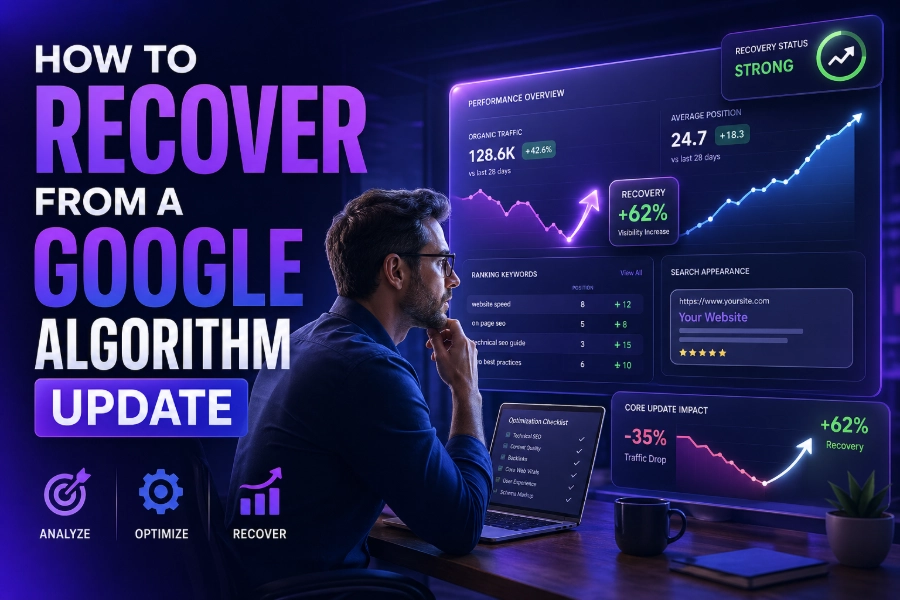
Google algorithm updates are a common challenge faced by websites, leading to drops in rankings and traffic. If your website has been hit by an algorithm update, it’s crucial to know how to recover from a Google algorithm update effectively.
Google Algorithm Updates
Google’s algorithm updates are designed to improve search results by prioritizing websites that offer valuable content and a good user experience. When your website is affected by these updates, it’s important to identify the type of update and its impact. Websites that are penalized often see significant drops in organic traffic.
The first step in recovery is to thoroughly assess your website. This includes checking for issues like slow page load times, poor mobile performance, low-quality content, or an unnatural backlink profile. Once you’ve identified the issues, it’s time to implement fixes.
A key part of Google’s updates is its focus on content quality and authority. Therefore, reviewing and improving your content is essential. To recover from an update, make sure your content is comprehensive, original, and provides real value to users.
To help speed up recovery from these updates, consider strategies such as improving your website’s content and focusing on beautifully crafted themes and templates to elevate your website. You can explore premium resources such as WordPress themes and PSD & HTML templates to enhance your site’s design and user experience. After these updates, consider improving your website’s content and focusing on beautifully crafted themes and templates to elevate it
How to Perform a Website Audit After an Algorithm Update
After an algorithm update, performing a website audit is critical. This involves assessing your website’s technical aspects, such as:
- Speed and Mobile Optimization: Google prioritizes mobile-friendly sites with fast load times. Use tools like Google’s PageSpeed Insights to check and improve your page speed.
- Backlink Profile: Google’s algorithms can penalize websites with unnatural or spammy backlinks. Use tools like Google Search Console and third-party services to assess and clean up your backlink profile.
- Content Quality: Review your content to ensure it aligns with Google’s E-E-A-T principles: Experience, Expertise, Authoritativeness, and Trustworthiness. Remove any low-quality content and improve existing pages to better meet user intent.
If you’re having difficulty making your site mobile-optimized or improving its speed, these common struggles may stem from an outdated website setup. You can resolve these issues using well-crafted tools and themes. Dive deeper and understand why WordPress is so hard to use.
Content Strategy for Recovery: Focus on Quality and Relevance
One of the main factors that Google’s algorithm updates focus on is content quality. In particular, Google rewards content that answers user queries comprehensively and provides a good user experience. To recover from an algorithm update, perform a content audit and ensure that all your content aligns with these standards.
This is a perfect time to update outdated articles, add more in-depth information, and remove duplicate or irrelevant content. Focus on creating high-quality, long-form content that thoroughly addresses user questions. Also, adding multimedia elements like images, videos, or infographics can significantly improve user engagement.
Another important step is to monitor and remove any low-quality backlinks. If you’re unsure of where to start, tools like Google’s disavow tool can help you eliminate spammy backlinks. Building a natural backlink profile through high-quality content and outreach is crucial.
SEO Recovery: Use Tools to Track Progress
Google’s algorithms are always evolving, so using the right tools to track progress during the recovery process is crucial. SEO tools can help you monitor changes in your website’s ranking, backlinks, traffic, and overall performance. You can use tools like Google Search Console, SEMrush, Ahrefs, or Moz to track these metrics.
Additionally, implementing structured data and improving your website’s user experience (UX) are crucial for better rankings after recovery. Make sure your website is easy to navigate, mobile-friendly, and provides a positive user experience.
Also, pay attention to on-page SEO factors such as title tags, meta descriptions, and internal linking. This will help ensure that your content is optimized for the best possible user experience.
Building a Strong Backlink Profile
After an algorithm update, recovering your website’s backlink profile is one of the most important steps. Google places high importance on high-quality backlinks, and if your site has suffered due to spammy or low-quality backlinks, it’s time to clean them up.
Start by using backlink analysis tools to identify harmful links. Afterward, use Google’s disavow tool to notify Google that you don’t want those links counted. Focus on building high-quality, authoritative backlinks by reaching out to other sites in your niche and offering valuable guest posts or collaborations.
For a thorough guide on cleaning up and strengthening your backlink profile, be sure explore information like how to tell what font a website is using. There, you will come across some key tools for improving site aesthetics and performance.
Keep Your Site’s Content Updated Regularly
One of the best ways to prevent future algorithm penalties is by regularly updating your content. Google rewards sites that consistently add new, relevant, and high-quality content. Keeping your content fresh ensures that your website remains competitive in search rankings and can recover faster from any algorithm changes.
Additionally, long-form articles have been shown to perform better post-update. Focus on creating content that goes into depth, answers user queries, and adds real value to your audience. Google tends to favor content that directly addresses what users are searching for.
Final Thoughts
Recovering from a Google algorithm update might seem daunting, but it’s certainly achievable with the right approach. By following these strategies—optimizing your content, improving your website’s technical SEO, and building a strong backlink profile—you can recover from a Google penalty and even improve your rankings in the long term.
Remember, Google’s updates are designed to prioritize user experience and high-quality content. By aligning your website with these standards, you ensure that you stay on top of future updates.
It’s essential to stay patient and monitor your progress over time. Effectively recovering from a Google algorithm update requires ongoing effort and commitment to improving your website. Keep refining your SEO strategy, and you’ll see positive results!
FAQs
How can I tell if my site was affected by a Google algorithm update?
To determine if your site was impacted, check for significant traffic drops in Google Analytics around the update date. You can also use Google Search Console for insights on ranking changes or penalties that may have occurred.
What are the common reasons for a drop in rankings after an algorithm update?
Google updates often target issues like poor content quality, low user engagement, slow website speed, technical SEO errors, and harmful backlinks. Identifying these problems through audits will help you recover and optimize for future updates.
How do I recover from a Google algorithm penalty?
Start by identifying the cause of the penalty. For manual penalties, address the issue and submit a reconsideration request via Google Search Console. For algorithmic penalties, focus on improving content quality and cleaning up your backlink profile.
Is it possible to recover from a Google algorithm update quickly?
Recovery from an algorithm update takes time. While some improvements, like fixing technical issues, can be implemented immediately, rebuilding trust and improving content quality may take weeks or months. Patience and consistency are key for lasting results.
How important is content quality for recovering from a Google algorithm update?
Content quality is crucial for recovering from an algorithm update. Ensure your content is original, comprehensive, and relevant to user queries. Following Google’s E-E-A-T principles (Experience, Expertise, Authoritativeness, and Trustworthiness) can help boost your rankings.
What role do backlinks play in recovering from a Google update?
Backlinks are essential for SEO recovery. Clean up toxic or low-quality backlinks, and focus on acquiring high-quality, authoritative links. A strong, natural backlink profile can significantly improve your site’s ranking after an algorithm update.
How can I improve my website’s mobile performance after an update?
To improve mobile performance, ensure your site is mobile-friendly by using a responsive design. Optimize images, reduce page load times, and test your site with Google’s Mobile-Friendly Test tool to ensure it meets Google’s standards for mobile optimization.
How can I recover from a Google algorithm update without hiring an SEO expert?
You can recover by conducting a website audit, improving content quality, fixing technical issues, and removing toxic backlinks. Many free tools, such as Google Search Console, can help you identify problems and implement recovery strategies independently.
How long does it take for Google to re-evaluate my site after recovery efforts?
Google can take a few days to a few weeks to re-evaluate your site after you’ve implemented recovery efforts. Monitoring your site’s performance in Google Search Console will give you insights into when your efforts begin to show results.
Can I prevent future penalties from Google algorithm updates?
While you can’t predict future updates, you can stay ahead by focusing on high-quality content, a positive user experience, technical SEO, and maintaining a healthy backlink profile. Regular site audits and staying informed about Google’s guidelines can help mitigate risks.