
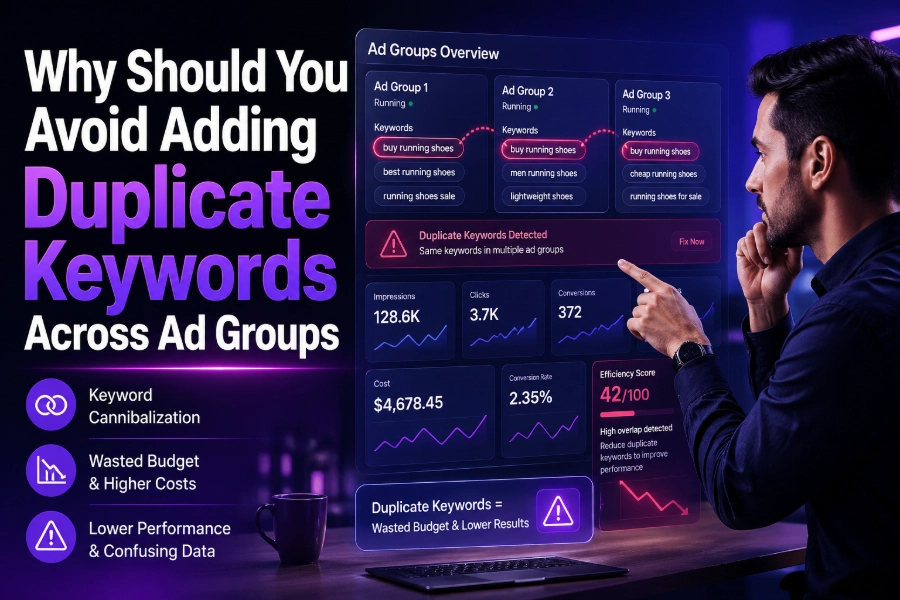
In the world of digital advertising, Google Ads is one of the most effective ways to promote your business. However, one common mistake that can severely impact the effectiveness of your campaigns is the inclusion of duplicate keywords across ad groups. Not only does this lead to internal competition for the same search terms, but it also undermines your ad quality, increases costs, and can reduce your ad visibility.
In this article, we will explain why you should avoid adding duplicate keywords across ad groups and provide practical steps to optimize your campaigns for better performance and cost efficiency.
The Impact of Duplicate Keywords Across Ad Groups
Duplicate keywords in Google Ads create several issues that directly affect your ad performance. The primary concern is that you are essentially competing against yourself for the same keyword. This internal competition means you end up bidding against your own ads, which drives up your cost-per-click (CPC) and can reduce the overall effectiveness of your campaign.
When multiple ad groups are targeting the same keyword, Google doesn’t know which ad to prioritize. As a result, your ads may not receive the optimal impression share, and your click-through rates (CTR) could suffer. Additionally, your Quality Score, which is based on relevance, CTR, and landing page experience, may drop due to fragmentation caused by duplicate keywords.
A simple solution to this problem is to use a platform like premium WordPress themes and PSD & HTML templates to streamline and organize your keyword strategy. By ensuring each ad group has unique keywords, you prevent competition within your campaigns and improve ad performance and relevance.
How Duplicate Keywords Affect Ad Rank and Quality Score
Ad Rank is determined by several factors, with your bid and Quality Score playing the most significant roles. When you have duplicate keywords across ad groups, it directly impacts your Quality Score, which in turn lowers your Ad Rank. The lower your Ad Rank, the harder it becomes to achieve the visibility and placement your ads deserve.
Quality Score is a key indicator for Google Ads’ algorithm to determine how relevant your ad is to users’ search queries. If you’re using duplicate keywords in different ad groups, it dilutes your relevance. This can lead to fewer impressions and lower ad placement, even if you’re willing to pay more per click. Essentially, you’re paying more for less effective results.
By organizing your campaigns and making sure keywords do not overlap, you improve your Quality Score, leading to lower CPC and more efficient ad spending. Additionally, this helps your ads to appear in the most relevant searches, increasing the likelihood of engagement and conversion.
How to Prevent Duplicate Keywords in Your Google Ads Campaigns
One of the easiest ways to prevent duplicate keywords in your campaigns is to conduct regular keyword audits. By auditing your campaigns regularly, you can identify overlapping keywords and eliminate them before they affect your ad performance.
Start by segmenting your keywords based on the themes of your ad groups. For example, if you have a campaign for “running shoes,” your ad groups could target different types of shoes or even specific shoe brands. This ensures that each ad group has a set of keywords unique to its theme and avoids duplication.
Another approach is to leverage Google’s keyword planning tools and automate your campaign’s keyword generation. This will help you avoid overlaps and provide a more efficient approach to keyword targeting. You can also use negative keywords to further refine your targeting and prevent irrelevant keywords from triggering your ads.
Additionally, consider using tools such as well-made themes and templates to elevate your website and optimize your keyword strategy. By integrating a solution focused on structure and optimization, you can ensure your Google Ads campaigns remain clutter-free and effective.
The Role of Negative Keywords in Avoiding Cannibalization
One of the most effective ways to prevent keyword cannibalization is by using negative keywords. Negative keywords help you filter out unwanted search terms, ensuring your ads appear only for relevant queries. This is particularly useful when you have different ad groups targeting similar products or services.
For instance, if you’re running two campaigns – one for men’s shoes and another for women’s shoes – you can use negative keywords like “men’s” or “women’s” in each ad group to prevent them from triggering each other. This method ensures your ads appear only to users searching for the products you offer, and it prevents overlap between campaigns.
By refining your keyword strategy with negative keywords, you help Google better understand the distinction between your ad groups, improving relevance and efficiency. This will not only save you money but also enhance your targeting to reach the right audience at the right time.
Conducting Regular Audits to Eliminate Duplicate Keywords
Regular audits are essential for maintaining an efficient Google Ads campaign. Auditing lets you track your keyword performance and identify problematic overlaps or inefficiencies. When performing a keyword audit, it’s important to consider both the keyword match types and the ad groups in which they appear.
A comprehensive audit should include checking each ad group’s keywords against those of all other ad groups to spot duplicates. Using tools like Google Ads Editor or third-party solutions can streamline this process, allowing you to make bulk changes without manually reviewing each ad.
As you conduct audits, also track keyword performance across all ad groups. This will give you insights into which keywords drive the best results, allowing you to optimize accordingly. You can consolidate high-performing keywords and remove underperforming ones to further refine your campaigns.
Why Quality Score Should Be a Top Priority in Google Ads
Quality Score is a critical metric in determining the success of your Google Ads campaigns. It directly impacts your CPC and ad position. As we’ve discussed, duplicate keywords can lower your Quality Score by spreading relevance too thin. However, ensuring your keywords are properly aligned with your ad groups improves your Quality Score, which in turn optimizes your overall campaign performance.
To improve your Quality Score, focus on delivering a highly relevant user experience. This includes ensuring your ads and landing pages align with the keywords in your ad groups. By providing a seamless experience, you not only improve your ad’s relevance but also increase the likelihood of conversion.
By prioritizing Quality Score and keyword relevance, you are essentially setting your campaigns up for long-term success. This requires consistent monitoring and optimization, but the benefits are substantial – lower costs, better ad positions, and higher conversions.
Utilizing Google Ads Automation to Prevent Overlaps
In addition to manual efforts like audits, you can take advantage of Google Ads’ automation features to reduce keyword overlaps. Google’s automated bidding strategies can help you bid more efficiently for keywords while optimizing for conversion value. Additionally, automated keyword management ensures your campaigns are always using the most relevant keywords.
Google Ads scripts can also be a powerful tool for keyword management. By setting up scripts to monitor and adjust bids based on performance, you can eliminate potential conflicts caused by duplicate keywords. This is especially useful for large campaigns with hundreds or thousands of keywords.
With platforms that provide beautifully crafted themes and templates to elevate your website, you can integrate automation into your Google Ads campaigns to further streamline your keyword strategy and reduce the risk of overlaps.
Conclusion
Avoiding duplicate keywords across ad groups is essential for improving your Google Ads campaign performance. By eliminating internal competition, you can reduce costs, improve your Quality Score, and enhance your ad visibility. Regular audits, the use of negative keywords, and automation tools can all help you maintain an optimized and efficient campaign. With proper keyword management, you will not only save money but also increase the likelihood of reaching the right audience with the right message at the right time.
By following these strategies, you will build a high-performing Google Ads campaign that delivers results while minimizing wasted spend. Take the time to refine your keyword strategy, and you will see the benefits of a more streamlined, cost-effective, and successful campaign.
FAQs
Why should I avoid adding duplicate keywords across ad groups?
Duplicate keywords within ad groups create internal competition, which can drive up your costs, reduce your Quality Score, and affect ad visibility. It’s essential to keep your keywords unique within each ad group to optimize ad performance.
How do duplicate keywords affect my Google Ads campaigns?
Duplicate keywords across ad groups lead to higher CPC, fewer impressions, and a lower Quality Score. Internal competition between your ads also means you’ll be bidding against yourself, making your campaigns less efficient and effective.
What is keyword cannibalization in Google Ads?
Keyword cannibalization occurs when multiple ads or campaigns target the same keyword, leading to competition. This can dilute your budget and lower ad performance by spreading clicks and impressions across multiple ads.
How can I fix keyword cannibalization in Google Ads?
To fix keyword cannibalization, regularly audit your campaigns, segment keywords into unique ad groups, and use negative keywords. This ensures your ads target distinct sets of keywords and prevent internal competition between campaigns.
Can negative keywords prevent duplicate keywords?
Yes, negative keywords can help prevent duplicate keywords from triggering ads across multiple ad groups. They filter out irrelevant search terms, ensuring your ads are displayed only to users searching for relevant products or services.
How often should I audit my Google Ads campaigns?
You should audit your Google Ads campaigns at least once a month. Regular audits help identify duplicate keywords, optimize keyword performance, and refine targeting to ensure you are not wasting ad spend or diluting your campaigns.
What tools can help me identify duplicate keywords?
Tools like Google Ads Editor and third-party platforms such as SEMrush, Optmyzr, or Ahrefs can help identify duplicate keywords across your campaigns. These tools simplify the process of auditing and refining your keyword strategy.
What impact does a low Quality Score have on my campaign?
A low Quality Score can result in higher CPC, lower ad placements, and reduced visibility. It means your ads are not seen as relevant to searchers, affecting their performance and your overall campaign efficiency.
How do I improve my Quality Score?
To improve your Quality Score, ensure your keywords are relevant to your ads, match your landing pages with your ad copy, and use highly relevant, unique keywords in each ad group. A better Quality Score leads to lower costs.
Can automated bidding help avoid duplicate keywords?
Automated bidding can help manage duplicate keywords by adjusting bids based on performance and preventing overlaps. Google Ads’ automation tools optimize bids and keyword targeting, which helps reduce internal competition and improve overall ad efficiency.